The Power and Versatility of Rescue Vehicle Vector and Silhouette Assets
In a visual-first world where clarity and instant recognition can make or break a design, few graphic elements carry the immediate authority of a rescue vehicle silhouette. Whether it’s the unmistakable profile of a fire truck, the streamlined shape of an ambulance, or the rugged stance of a search and rescue truck, these forms communicate urgency, safety, and professionalism without a single word. Designers, marketers, educators, and business owners are increasingly turning to rescue vehicle vector collections precisely because they deliver this impact across countless applications—while remaining endlessly adaptable thanks to modern file formats.
What makes these assets particularly valuable isn’t just their striking appearance. It’s the fact that a well-prepared rescue vehicle graphic package gives you three essential file types in one bundle: editable EPS vector files, transparent PNG images, and high-resolution JPG renders. Each format serves a distinct purpose, and understanding how they work together transforms a simple silhouette from a static image into a flexible design tool that fits seamlessly into both digital and print workflows.
What Rescue Vehicle Silhouette Assets Actually Include
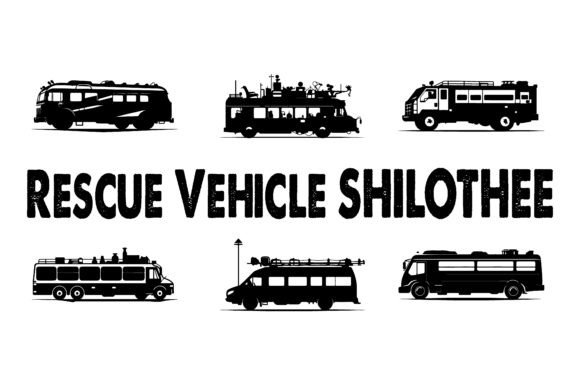
Before diving into applications, it helps to clarify what you’re getting when you acquire a comprehensive rescue vehicle illustration set. At its core, you receive a black silhouette vector of an all-terrain vehicle or emergency response vehicle—often encompassing ambulances, fire engines, police cars, and specialized rescue trucks. The silhouette approach strips away distracting details and leaves behind a pure, recognizable shape that works across cultures and contexts.
The typical package breaks down into three complementary formats. First, you have EPS editable files as single documents. These are vector-based, meaning you can scale them infinitely without losing quality. Need the silhouette to span a billboard? No problem. Want to zoom in on a detail for a business card? The edges stay razor-sharp. The editable nature also means you can recolor elements, adjust anchor points, or combine shapes with other design components directly in software like Adobe Illustrator or Affinity Designer.
Second, all transparent PNG files are included separately. These raster images already have their backgrounds removed, allowing you to place a rescue vehicle silhouette directly onto colored backgrounds, photographs, textures, or layered compositions without dealing with white boxes or clipping paths. This format is the workhorse of web design, presentation decks, and digital media where quick placement matters.
Third, the package includes high resolution single JPG images. These are flattened, background-included raster files optimized for situations where file size and universal compatibility take priority—think email attachments, social media uploads, or quick print proofs. While not editable like vectors or background-free like PNGs, they provide a reliable, ready-to-use option when you need something fast.
Why Designers Are Shifting Toward Vector Emergency Vehicle Graphics
The design landscape has shifted noticeably over the past few years. Brands and organizations want assets that can move effortlessly between mediums—from a mobile app icon to a trade show banner, from an Instagram post to a safety training manual. Raster-only graphics can’t keep up with these demands. A vector rescue vehicle file solves this by being resolution-independent, lightweight, and editable in ways that bitmap formats simply aren’t.
There’s also a growing appreciation for silhouette-based design language. Where detailed, photorealistic imagery can feel dated or visually noisy, clean silhouettes offer a modern, minimalist aesthetic. An emergency vehicle silhouette used as a website icon or a section divider feels intentional, not decorative. It guides the viewer’s eye without competing for attention, which aligns well with current user experience priorities that emphasize clarity and speed over visual clutter.
For organizations involved in emergency services, healthcare, disaster relief, or community safety, these graphics carry an additional layer of meaning. A silhouette ambulance or fire truck instantly signals trustworthiness and preparedness. When incorporated thoughtfully into branding materials, educational content, or public awareness campaigns, the imagery reinforces the organization’s mission without needing lengthy explanations.
Practical Applications Across Creative and Professional Fields
The question of where you can use all three file types has a surprisingly expansive answer. Below are grounded, realistic scenarios drawn from how professionals across different sectors actually deploy rescue vehicle silhouette assets in their daily work.
Graphic Design Projects That Benefit From Strong Silhouettes
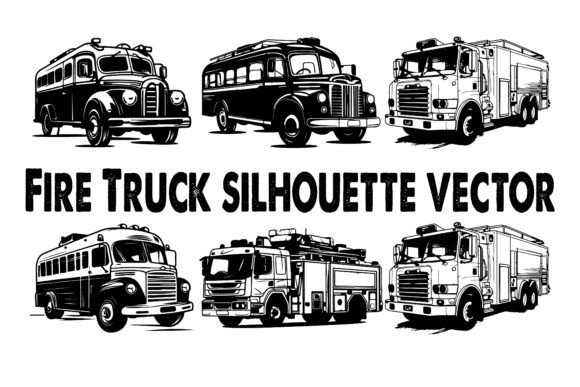
Posters, flyers, banners, and brochures often need visual anchors that convey a message before the viewer reads a single word. A vector fire truck silhouette placed strategically on an event flyer for a community safety day immediately communicates the event’s theme. Because the EPS file remains editable, designers can adjust the silhouette’s color to match brand palettes, apply gradient overlays, or even duplicate and layer the shape for more complex compositions. The transparent PNG version becomes useful when the design requires the silhouette to sit over a photograph of a fire station or an abstract background texture.
Banners present a unique scaling challenge. A rescue vehicle outline vector can stretch across several feet of vinyl without pixelation, maintaining crisp edges that reflect well on the organization commissioning the banner. Many designers keep a folder of emergency vehicle vector assets specifically for these large-format projects, knowing they won’t have to hunt down a high-enough-resolution source file at the last minute.
Web Design and Digital Interface Integration
Modern websites lean heavily on iconography and subtle visual cues to guide users. A rescue vehicle icon in silhouette form might serve as the clickable button for an emergency services directory, a category marker in a fleet management dashboard, or a background element in the hero section of a nonprofit’s homepage. Transparent PNGs are particularly suited here because they layer cleanly over hero images, gradient backgrounds, or patterned sections without leaving a visible bounding box.
Section dividers are another underappreciated use case. A subtle silhouette emergency vehicle repeated horizontally or scaled to act as a visual break between content blocks adds personality to a page without introducing distracting photography. Developers appreciate that PNG files with transparency can be implemented directly in CSS without additional editing, speeding up the deployment process.
Merchandise Design That Connects With Audiences
Apparel and promotional products remain one of the most tangible ways organizations build community around their message. A silhouette fire engine printed on a T-shirt for a volunteer fire department fundraiser, a vector ambulance shape on a mug for EMS appreciation week, or a rescue truck outline on a set of stickers for a search and rescue team—these applications feel personal and meaningful. The EPS file allows print shops to separate colors for screen printing, while the high-resolution JPG can serve as a quick proof to show clients before production begins.
What makes silhouette designs particularly successful on merchandise is their boldness. They read well at a distance, hold up after repeated washing (unlike intricate photographic prints), and appeal across age groups. A hat with a small embroidered emergency vehicle silhouette feels understated and professional, while a larger back print on a hoodie makes a stronger statement.
Advertising Campaigns That Demand Consistency
Advertising across multiple platforms—online ads, social media posts, print ads, and billboards—requires assets that maintain visual consistency regardless of size or medium. A rescue vehicle graphic used in a Facebook ad must look identical to the version printed in a local newspaper. Vector files guarantee this consistency because the same core file exports to every required format and resolution.
Social media posts often benefit from transparent PNG versions of rescue vehicle silhouettes overlaid on campaign photography. A silhouette police car positioned in the corner of an image about community policing creates brand recognition without overwhelming the photograph’s human element. Meanwhile, JPG versions are useful for quick uploads to platforms that don’t support transparency or for email newsletter headers where file size must be kept minimal.
Digital Media, Apps, and Interactive Content
App icons represent one of the most constrained yet high-visibility uses for silhouette graphics. A vector emergency vehicle icon must remain legible at sizes as small as 24 by 24 pixels while still representing the app’s function clearly. Silhouettes excel in this environment because their simplified shapes survive extreme scaling better than detailed illustrations. Game developers also incorporate rescue vehicle silhouettes into user interfaces, map markers, or vehicle selection screens where recognizable shapes matter more than rendered detail.
E-books and digital publications increasingly use graphic elements to break up text and reinforce topics. A silhouette first responder vehicle serves as an effective chapter opener in a guide about disaster preparedness or a training manual for emergency medical technicians. The transparent PNG format integrates smoothly into PDF layouts created in InDesign or Canva without requiring the designer to manage complex clipping masks.
Presentations That Communicate With Authority
PowerPoint and Keynote presentations benefit enormously from well-chosen graphics. A rescue vehicle shape placed next to a statistic about response times makes the data feel more concrete. Presenters who use silhouettes rather than clip art or generic stock photos signal a higher level of design awareness. Because PNG files maintain transparency, the silhouette sits cleanly on the slide background without the awkward white rectangle that often accompanies JPG images in presentation software.
For organizations that deliver the same presentation repeatedly—such as fire departments conducting school visits or emergency management agencies running community workshops—having a consistent set of vehicle silhouettes across all slides builds a cohesive visual identity that audiences come to recognize and trust.
Educational Materials With Clear Visual Communication
Textbooks, infographics, diagrams, and safety manuals need graphics that explain without distracting. A vector ambulance silhouette included in a first aid training diagram focuses attention on the information rather than decorative flourishes. Educators and instructional designers value the editable EPS format because they can adjust line weights to match the document’s overall style or add numbered callouts that point to specific vehicle features.
Infographics about emergency preparedness, traffic safety, or community resources often incorporate multiple rescue vehicle outlines to represent different categories of responders. The consistent silhouette style ties the information together visually, making complex data sets more approachable for readers who might otherwise skip over dense text blocks.
Stationery and Branded Materials
Business cards, letterheads, and notebooks represent small but meaningful touchpoints where a rescue vehicle silhouette can reinforce brand identity. A search and rescue organization might place a subtle silhouette in the corner of its letterhead, while an ambulance service could use a tonal watermark on internal notebooks. These applications work best when the silhouette is used sparingly and consistently—the EPS format ensures the exact same shape appears across all materials, down to the millimeter.
Print shops benefit from receiving vector files because they can process them through their production software without worrying about resolution limits. High-resolution JPGs serve as reliable preview files during the proofing stage, helping clients and printers align on expectations before committing to a full print run.
Art Projects and Personal Creative Work
Beyond commercial applications, rescue vehicle silhouettes find their way into wall art, scrapbooking, and craft projects. A vinyl cutter can trace an EPS file to produce a decal for a child’s bedroom wall or a customized laptop cover. Scrapbookers might print a transparent PNG onto patterned paper to create a unique embellishment for a first responder memory album. The versatility extends to laser engraving, stencil making, and other craft techniques that rely on clean vector paths to guide tools and materials.
Product Packaging That Tells a Story
Box designs, labels, and wrapping paper for products related to emergency preparedness, children’s toys, or safety equipment often benefit from silhouette imagery. A rescue vehicle design printed on packaging immediately signals the product’s theme to browsing customers. Because packaging design involves multiple print processes and size variations, having the artwork in editable EPS format means the designer can easily create die lines, adjust colors for different box sizes, or adapt the graphic for labels without starting from scratch each time.
Wrapping paper featuring repeated patterns of fire truck and ambulance silhouettes creates a memorable unboxing experience, particularly for gifts aimed at children interested in emergency services. The transparent PNG versions allow designers to experiment with pattern layouts and background colors before finalizing the print file.
Making the Most of Multiple File Formats
Understanding when to reach for each file type separates effective workflows from frustrating ones. The EPS editable file belongs in your vector editing software for customization, scaling, and professional print preparation. The transparent PNG excels in digital design, web development, and layered compositions where background removal matters. The high-resolution JPG provides a dependable fallback for quick placements, email sharing, and platforms that don’t support vector or transparency formats.
Rather than viewing these as redundant versions of the same image, smart creators treat them as complementary tools. A single project might use the EPS for the master design file, export specific elements as PNGs for web use, and generate JPGs for client approvals—all originating from the same rescue vehicle vector silhouette.
Who Benefits Most From These Assets
Freelance graphic designers who juggle multiple client projects appreciate having a ready library of emergency vehicle silhouettes that they can adapt without building from scratch. Marketing teams at nonprofits and public safety organizations use the graphics to maintain consistent visual communication across campaigns. Educators and instructional designers incorporate them into materials that explain complex systems. Small business owners in the first responder supply space integrate the silhouettes into product listings, packaging, and promotional materials.
Even hobbyists and crafters find value. The increasing availability of home cutting machines and printable materials means a parent planning a firefighter-themed birthday party can use a rescue truck silhouette to create decorations, invitations, and party favors that feel polished and intentional.
Choosing Quality Over Quantity
Not all silhouette vector sets are created equally. Look for collections where the shapes are accurately proportioned relative to real vehicles, where curves flow smoothly without jagged anchor points, and where the silhouette remains recognizable even at small sizes. A well-crafted rescue vehicle silhouette should work as an ambulance in one context and remain clearly distinct from a police car or fire truck in another—something that requires attention to proportion and distinctive vehicle features during the illustration process.
Investing in quality assets upfront saves the time and frustration of fixing poorly constructed vector files later. Designers who have spent hours cleaning up messy anchor points understand that a clean EPS file is worth far more than a dozen sloppy ones, regardless of how many file formats the package advertises.
Integrating Silhouettes Into a Broader Design System
For organizations building a visual identity, rescue vehicle silhouettes become part of a larger design language. Consistent stroke weights, matching opacity levels, and harmonious spacing between vehicles create a system that feels cohesive across websites, printed materials, signage, and merchandise. When the same vector fire truck, ambulance, and search and rescue vehicle appear throughout an organization’s materials, audiences begin to associate those specific shapes with that specific group—a subtle but powerful branding effect.
The editable nature of EPS files makes this systematizing possible. Designers can extract colors from existing brand guidelines, apply them to the silhouette, and save template files that future team members can build upon. This forward-thinking approach to asset management pays dividends as organizations grow and their design needs become more complex.
Practical Workflow Integration
Most design software today handles EPS, PNG, and JPG formats natively, which means there’s little friction in adopting these assets regardless of your preferred tools. Adobe Creative Cloud applications, Affinity products, CorelDRAW, Inkscape, Canva, and even presentation software like PowerPoint all support placing and manipulating these file types. The key is organizing your asset library so you can quickly locate the right format when a project demands it, rather than searching through folders or settling for a suboptimal version.
Many professionals create a master folder for each vehicle type—ambulance, fire truck, police car, rescue truck—and store all three formats together. This simple organizational habit removes decision fatigue and keeps projects moving efficiently, whether you’re responding to a last-minute client request or developing a long-term branding initiative.