ForkliftArt & IndustrialMachinery: Visual Tools That Work
Strong visuals do more than catch the eye. They explain complex ideas without a single word. In industries where heavy equipment and safety protocols dominate daily operations, clear imagery becomes essential. Silhouettes of forklifts, combine harvesters, and warehouse equipment have quietly become some of the most versatile assets available to business owners, educators, designers, and marketing teams. When you combine the clean lines of ForkliftArt 🎨 with the rugged appeal of IndustrialMachinery 🏗️, you get a visual language that communicates strength, precision, and reliability across dozens of practical applications.
This article explores how these silhouette designs can strengthen safety guides, elevate agritourism marketing, improve corporate branding, and simplify educational content. You will find realistic use cases, thoughtful recommendations, and honest observations about where these tools fit best—and where you might want to compare other options.
Why Silhouettes Work So Well for Machinery-Heavy Industries
A silhouette strips an object down to its essential shape. For a forklift or combine harvester, that shape is instantly recognizable. This simplicity carries several practical advantages. First, silhouettes reproduce cleanly at any size—from a tiny app icon to a large trade show banner—without losing clarity. Second, they avoid the visual clutter that comes with detailed photographs, making them ideal for instructional materials where focus matters. Third, they carry a timeless, professional tone that suits both modern digital interfaces and traditional print formats.
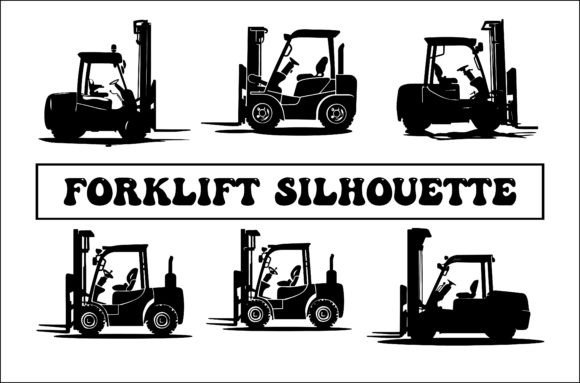
For anyone creating content around warehouse operations, agricultural machinery, or material handling, ForkliftArt 🎨 and IndustrialMachinery 🏗️ silhouettes offer a way to communicate quickly and clearly. A warehouse supervisor drafting a safety poster does not need a photographer or a studio setup. A farm tour operator promoting an event online does not need expensive custom illustrations. The right silhouette can do the job efficiently and effectively.
Making Farm Safety Guides Clearer and More Effective
Safety manuals for combine harvesters have a single job: prevent accidents. But too often, these guides become dense walls of text that operators skim rather than study. Adding silhouettes changes how people absorb information. A well-placed outline of a combine harvester showing danger zones near the header or auger can communicate risk faster than a paragraph of warnings. The human brain processes simple shapes almost instantly, which matters when seconds count in a real-world setting.
Consider a maintenance checklist for pre-harvest inspections. Instead of a bulleted list describing each check point, you could pair each step with a minimal silhouette indicating the exact component—belts, blades, hydraulic lines. The operator sees the shape, locates the part, and completes the check with fewer errors. This approach works especially well for multilingual teams or workers with varying literacy levels. The image transcends language barriers.
Farm equipment dealers and cooperative extension offices have begun adopting this method in their printed and digital guides. They report fewer support calls and clearer communication during training sessions. The IndustrialMachinery 🏗️ silhouette style lends itself naturally to exploded-view diagrams and step-by-step maintenance illustrations, where accurate proportions matter more than artistic flair.
Attracting Visitors Through Agricultural Tourism
Agritourism is growing rapidly as farms diversify their revenue. Corn mazes, pick-your-own orchards, and machinery demonstrations draw families, school groups, and tourists looking for authentic rural experiences. Marketing these activities requires visuals that feel genuine and inviting. Silhouettes of tractors, combines, and forklifts used in farm operations strike the right balance—they suggest real working farms without feeling overly commercial or staged.
A brochure for a harvest festival might feature a warm sunset backdrop with the dark silhouette of a combine harvester in the foreground. The image says tradition, hard work, and community all at once. On social media, event announcements using these silhouettes tend to perform well because they stand out in feeds cluttered with busy photos. The contrast is naturally attention-grabbing.
Online ads benefit similarly. A simple banner ad with a forklift silhouette and a short headline like "See Real Equipment Up Close" can outperform a photograph-heavy design. Why? Because viewers process the ad faster and understand the offer immediately. For farm tour operators working with limited design budgets, ForkliftArt 🎨 resources provide a cost-effective way to create consistent branding across flyers, website headers, and signage without hiring a graphic designer for every piece.
Strengthening Brand Identity With Machinery Silhouettes
Logos built around equipment silhouettes convey specific qualities: efficiency, industrial strength, innovation, and reliability. A combine harvester silhouette in an agricultural brand's logo suggests deep roots in farming technology. A forklift silhouette for a logistics company communicates movement, capability, and warehouse expertise. These associations form quickly in a customer's mind, often before they read a single word of your company description.
The best logo designs using IndustrialMachinery 🏗️ silhouettes keep the shape clean and avoid excessive detail. At small sizes—on a business card or mobile screen—fine lines disappear. A bold, simplified outline holds its impact. Consider pairing the silhouette with modern typography to balance the rugged shape with a forward-looking feel. This combination works well for equipment manufacturers, repair services, parts suppliers, and agricultural tech startups.
One practical suggestion: test your silhouette logo in black and white before adding color. A strong silhouette should stand on its own. If the shape becomes unclear or unrecognizable without color, it may need refinement. This constraint often leads to more memorable, versatile branding.
Enhancing Digital Content and Educational Materials
Blogs, websites, and digital platforms covering harvesting technology or warehouse operations face a common challenge: finding visuals that match the technical depth of their content. Stock photos often feel generic or staged. Silhouettes offer an alternative that looks intentional and tailored. A website header featuring a combine harvester silhouette immediately signals the topic to visitors, reducing bounce rates by helping people confirm they are in the right place within seconds.
Infographics represent another strong use case. The stages of crop harvesting—planting, nurturing, reaping, threshing, and storing—can each be represented by a relevant machinery silhouette. The visual consistency ties the information together and helps readers follow the sequence. Agricultural educators and extension agents find this method particularly effective for workshops and printed handouts. Students and farmers alike retain the information longer when the imagery reinforces the concepts.
Agricultural software developers also incorporate ForkliftArt 🎨 silhouettes as interface icons. App dashboards for inventory management, equipment tracking, or maintenance scheduling benefit from simple, universally recognizable symbols. A forklift icon for "material movement" or a combine icon for "harvest module" reduces cognitive load and speeds up user adoption. This is a subtle but meaningful improvement in user experience design.
Using Silhouettes in Print, Corporate, and Decorative Projects
Print media remains a staple for equipment dealers, trade show exhibitors, and agricultural event organizers. Posters advertising farm machinery auctions or seasonal sales can use large-scale silhouettes as bold background elements that do not compete with text overlays. The high contrast between the dark shape and lighter background naturally guides the eye toward headlines and call-to-action buttons.
Corporate and government reports on agricultural machinery trends often feature dry statistical charts. Adding a tasteful silhouette on the cover or section dividers humanizes the document without undermining its professional tone. It signals that the content is industry-grounded and practitioner-focused, not just abstract data. Business analysts and policymakers appreciate this subtle framing when they present findings to stakeholders.
For decorative and artistic uses, framed prints of farm equipment silhouettes have found a place in rustic home décor, farm office walls, and agribusiness waiting rooms. The appeal crosses demographic lines—young families decorating a farmhouse-style kitchen, retired farmers honoring their livelihood, and corporate offices wanting regional character all gravitate toward this aesthetic. IndustrialMachinery 🏗️ art feels grounded and authentic in a way that many other decorative themes do not.
Who Gains the Most From These Visual Tools
Several specific groups benefit directly from incorporating machinery silhouettes into their work. Small farm operators running agritourism side businesses can create professional marketing materials without outsourcing design work. Safety coordinators at warehouses and grain elevators can produce clearer training posters and emergency procedure guides. Graphic designers serving agricultural and industrial clients can build libraries of reusable assets that speed up project turnaround and reduce costs.
Educators and technical writers at vocational schools, extension offices, and equipment manufacturers get a practical communication tool that transcends reading level and language background. Marketers and content creators in the agricultural technology space can maintain visual consistency across blogs, social media, and printed collateral. The common thread is that these tools save time, reduce costs, and improve how clearly the message lands with the intended audience.
Freelancers and hobbyists may also find value. A blogger writing about warehouse efficiency or harvest technology can use silhouettes to create featured images that look custom-made rather than pulled from stock libraries. A small business owner selling farm-related products on Etsy or at local markets can brand their packaging with simple, striking visuals that cost almost nothing to produce.
Recognizing Limitations and Making Informed Choices
Silhouettes suit many purposes, but they are not the right answer for every situation. Highly detailed repair instructions, for instance, may require annotated photographs or technical drawings rather than simplified outlines. Certain branding projects may need the warmth and texture that only photography can provide, particularly when human connection is central to the message. A silhouette of a machine communicates capability, but not emotion.
There is also a risk of overuse. When too many materials rely on the same visual style without variation, audiences may begin to tune out. The remedy is thoughtful application—use ForkliftArt 🎨 and IndustrialMachinery 🏗️ silhouettes where they strengthen the message, and let other visual styles carry the load elsewhere. Variety keeps visual communication fresh.
Legal considerations also matter. Ensure any silhouette you use is either created from scratch, licensed appropriately, or sourced from a provider offering commercial use rights. Copying an existing logo or trademarked shape can create intellectual property issues. This is particularly relevant for equipment manufacturers whose machine profiles may be distinctive and protected. Doing your due diligence protects your brand and your budget.
Tying It All Together Practically
The most effective communicators in agriculture, warehousing, and industrial fields understand that ForkliftArt 🎨 and IndustrialMachinery 🏗️ silhouettes are not merely decorative. They are functional tools that improve understanding, increase efficiency, and create cohesion across diverse materials. From the safety poster pinned in a break room to the app icon tapped daily on a warehouse floor, these simple shapes work quietly in the background of countless professional environments.
For your next project—whether it is a farm tour flyer, an equipment manual, a corporate report, or a website redesign—consider how a silhouette might simplify your message. Choose shapes that are recognizable, uncluttered, and properly scaled for their intended use. Test them across different sizes and formats to confirm readability. With thoughtful implementation, you may find that the simplest visual solution delivers the strongest results.