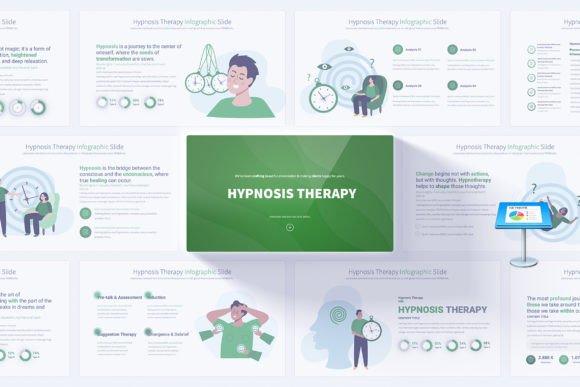
Designing Presentations That Reflect the Depth of Hypnosis Therapy
Walking into a room and clicking through a generic slide deck can quietly undermine even the most experienced therapist's credibility. The Hypnosis Therapy Keynote template enters this space as a practical resource for practitioners who want their visual materials to match the professionalism of their clinical work. With 17 unique, purpose-built slides and a total of 204 layout options, it gives mental health professionals, wellness coaches, and therapy educators a flexible foundation that respects both the science and the nuance of hypnotherapy.
What makes a presentation feel aligned with therapeutic values isn't flash. It is coherence, clarity, and a visual language that doesn't distract from the message. This template builds on those principles through handmade infographics, editable elements, and a master slide structure that keeps customization straightforward without sacrificing polish.
The Quiet Evolution of Therapy Presentations
For a long time, therapy-related presentations leaned heavily on text-heavy slides, clinical diagrams copied from textbooks, or hastily assembled visuals that did little to support the speaker's expertise. Audiences—whether they are clients, workshop attendees, or professional peers—have grown accustomed to cleaner, more intentional design in every other part of their lives. Streaming platforms, wellness apps, and even social media have raised the baseline expectation for visual communication.
Hypnosis therapy occupies a particularly interesting position here. The practice itself deals with focus, suggestion, and the deliberate shaping of attention. A cluttered slide contradicts that very essence. Practitioners are increasingly aware of this tension. They want tools that help them present concepts like trance states, suggestibility, and therapeutic frameworks without visual noise creeping into the experience.
This shift isn't about chasing design trends for their own sake. It reflects a deeper understanding that the medium carries part of the message. When a therapist presents research findings or explains the stages of a hypnotherapy session, the slides should feel like an extension of the calm, focused environment they aim to create in their practice.
Why Structure Matters as Much as Content
A common mistake in building presentations is treating each slide as an isolated canvas. The result is often a disjointed sequence that forces the audience to reorient themselves every few minutes. The Hypnosis Therapy Keynote template addresses this by grounding everything in master slides. This means fonts, color schemes, and layout logic stay consistent across the entire deck without requiring manual adjustments on every page.
For a therapist preparing a workshop on smoking cessation through hypnotherapy, this structural consistency serves a real purpose. The audience moves through an opening slide that establishes the topic, into content slides that break down techniques, and arrives at a closing slide that reinforces key takeaways. The visual thread remains unbroken. That subtle continuity helps maintain engagement and reduces the cognitive load on viewers who are already processing complex psychological concepts.
The template includes dedicated opening and closing slides, which may seem like a small detail but carries practical weight. A strong opening slide sets the tone before a single word is spoken. A thoughtful closing slide leaves the audience with a clear takeaway and contact information, turning a passive viewing experience into a potential next step—whether that is booking a session, signing up for a newsletter, or simply reflecting on what they learned.
Customization Without the Design Learning Curve
Not every therapist has the time or inclination to learn graphic design. That reality often leads to a reliance on whatever default templates come with presentation software, which rarely align with the tone of a therapy practice. The 12 color variations included in this Hypnosis Therapy Keynote resource offer a practical middle ground. Each variation uses a light background, which keeps the slides feeling open and breathable—an aesthetic choice that works well for topics related to mental health, mindfulness, and personal growth.
Color psychology matters in this context. Soft blues and greens tend to evoke calm and trust. Warmer tones can feel more approachable for community workshops. Having multiple ready-made palettes means a practitioner can adapt the same core content to different audiences without rebuilding anything from scratch. A presentation for corporate stress management might lean toward cooler, more subdued tones, while a weekend wellness retreat could use a warmer, more inviting palette. The underlying content stays the same; the emotional framing shifts through color alone.
Editable elements extend well beyond color. Every infographic, icon, and text block can be adjusted to fit specific content needs. The 280 bonus vector icons are especially useful for therapists who want to represent abstract concepts—think symbols for relaxation, focus, sleep, or personal transformation—without resorting to stock photography that can feel staged or disconnected from real therapeutic work.
Handmade Infographics Built for Therapy Topics
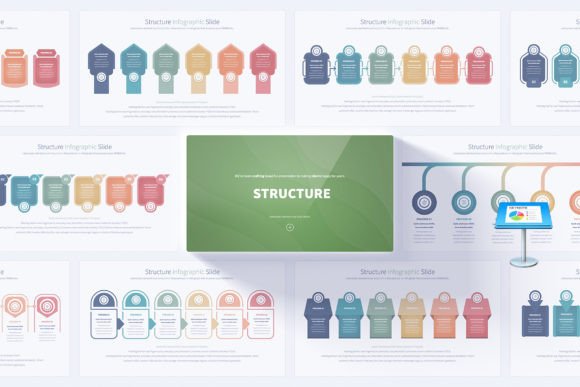
Generic infographics often fall short when applied to mental health content. A bar chart designed for sales figures doesn't naturally translate to explaining the success rates of different hypnotherapy protocols. The handmade infographics in this template were created with therapy and mental health in mind, which changes how data and processes are visualized.
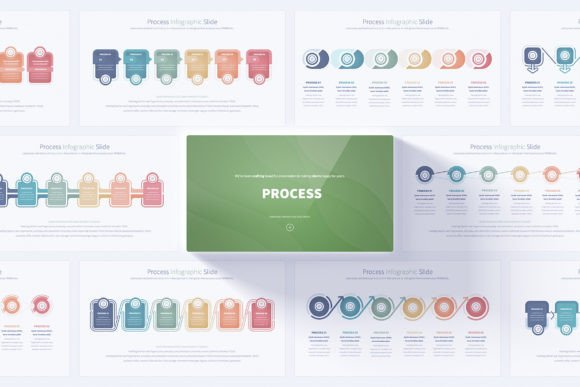
Consider a slide that explains the stages of a hypnotherapy session: induction, deepening, suggestion, and emergence. A flowchart built specifically for this purpose can map those stages in a way that feels intuitive. Arrows, icons, and spatial layout work together to guide the viewer’s eye through the sequence. This is different from forcing a generic process diagram to fit a therapeutic narrative. The difference may seem subtle, but audiences pick up on it. When visuals align with content, trust in the presenter’s authority grows organically.
Practitioners who present case studies or outcome data also benefit from infographics that handle sensitive information with appropriate visual restraint. Bold, aggressive data visualizations can feel out of place when discussing client progress or therapeutic outcomes. The design language here leans toward clarity and subtlety, which suits the subject matter.
Modern Workflows and the Demand for High-Resolution Output
Presentation screens have changed. Conference rooms, webinar platforms, and even tablet screens now expect 16:9 Full HD resolution as a baseline. Projecting a lower-resolution slide deck onto a large screen can introduce blurring, pixelation, or awkward cropping that distracts from the content. The Hypnosis Therapy Keynote template is built at 16:9 Full HD resolution, ensuring that slides render cleanly across modern displays.
This matters for therapists who record their presentations for on-demand viewing or who present at hybrid events where some attendees watch on large monitors and others on laptops. Consistency across devices isn't just a technical checkbox; it affects how professional the presentation feels to every single viewer.
Animated transitions, which are included in the template, serve a functional purpose beyond visual interest. Subtle animations can control the pace at which information appears on screen. For a hypnotherapy educator explaining a multi-step technique, revealing one point at a time keeps the audience from reading ahead and disengaging from the verbal explanation. Used thoughtfully, animation becomes a pacing tool rather than a decorative afterthought.
Beyond the Therapy Room: Unexpected Applications
While the template is designed with mental health professionals in mind, its structure lends itself to adjacent fields. Wellness coaches who incorporate hypnotherapy principles into their programs can use the same slides to introduce mindset work, relaxation techniques, or goal-setting frameworks. Educators teaching introductory psychology courses might adapt the infographics to explain altered states of consciousness. Even business strategy meetings that touch on focus, productivity, or stress reduction can benefit from a visual style rooted in clarity and calm.
The 204 total slides provide enough variety to build multiple presentations from a single template purchase. A therapist might use one subset of slides for client intake sessions, another for professional conference talks, and a third for online courses. Each can carry its own color variation and content while maintaining a recognizable visual identity.
This versatility reflects a broader shift in how professionals think about their tools. Rather than searching for a new template for every speaking engagement or workshop, more practitioners are investing in comprehensive resources that adapt to multiple contexts. The included PDF documentation supports this by walking users through setup and customization, reducing the time between purchasing the template and delivering a polished presentation.
What Separates Purpose-Built Templates from Generic Alternatives
The marketplace is full of presentation templates, but most are designed for broad commercial use. Sales pitches, marketing decks, and startup investor presentations dominate the landscape. Mental health professionals often find themselves stripping out aggressive design elements, replacing stock photos of boardrooms with something more appropriate, and generally fighting against a template’s original intent.
A purpose-built resource like the Hypnosis Therapy Keynote template removes that friction. The icons are relevant. The infographics fit the subject. The color palettes don't need to be wrenched into a calmer tone. The opening and closing slides already feel appropriate for therapeutic or educational settings. For a busy practitioner preparing for a workshop or a conference, this alignment saves hours of redesign work and produces a result that feels intentional from the first slide to the last.
Ease of use is not about dumbing things down. It is about removing unnecessary steps between having something to say and being ready to say it well. The master slide structure, the editable elements, and the bonus icon library all serve that goal. They let the presenter focus on content and delivery, secure that the visual container will hold up its end of the communication.
Making the Investment Count
Choosing a presentation template is ultimately a decision about where to spend creative energy. For therapists, coaches, and educators, that energy is better directed toward crafting compelling narratives, refining explanations of complex techniques, and preparing to connect authentically with an audience. When the visual framework is already sound, the content creator can operate from a place of confidence rather than compensation.
The Hypnosis Therapy Keynote template represents a considered option for professionals who present regularly and want their materials to reflect the same care they bring to their client work. It doesn't promise to transform anyone into a world-class presenter overnight. What it does offer is a solid, adaptable, and visually coherent starting point—one that understands the tone and subject matter of hypnotherapy and doesn't ask the user to fight against its design to make it work.
In a field where building trust is paramount, every detail counts. The slides a therapist puts on screen are part of that trust-building process. They signal preparation, respect for the audience's attention, and an understanding that communication happens on multiple levels simultaneously. A well-designed presentation supports the spoken message without competing with it, and that quiet support can make a meaningful difference in how the work is received.