Man and Woman Scientist Profession: Elevating Visual Strategy Through Purposeful Illustration
Visual assets do more than fill empty space on a page. They shape perception, reinforce credibility, and silently communicate values long before a single word is read. When you feature man and woman scientist profession imagery in your materials, you are not just adding decoration—you are making a deliberate statement about inclusivity, expertise, and the forward-thinking nature of your organization. Whether you are building a brand, designing an e-learning module, or crafting a data-driven infographic, the quality and relevance of your scientific illustrations can directly influence engagement, trust, and message retention.
Yet many teams settle for generic stock photos that feel disconnected from their actual audience. Others spend hours trying to adapt rigid graphics that break when scaled or recolored. A more strategic approach involves curating a flexible library of vector-based scientist illustrations—one that represents both men and women in authentic laboratory, research, and field environments—and then tailoring every element to align with your specific goals. This article explores how to move beyond random image selection and instead use professional, editable scientific visuals to strengthen communication, accelerate design workflows, and build a cohesive visual identity over time.
Why Representation in Scientific Visuals Matters Strategically
Modern audiences are attuned to nuance. A landing page that exclusively shows male researchers can unintentionally signal exclusion, while generic lab coats without clear context may fail to convey the complexity of contemporary science. When you integrate both man and woman scientist profession characters into your visuals, you reflect the collaborative, diverse reality of STEM fields. This isn't about meeting a quota; it's about aligning your imagery with the values you want to project—whether that's educational equity, corporate social responsibility, or simply a commitment to accuracy.
For marketers and educators, this alignment translates into measurable outcomes. Research in advertising and user experience consistently shows that audiences engage more deeply with content that feels relevant to their identity or aspirations. A young woman considering a STEM career is more likely to click, share, or remember a social media graphic that includes a female scientist she can relate to. A B2B consulting firm can subtly differentiate its proposal by using illustrations that depict mixed-gender research teams rather than the standard solitary white coat figure. These small strategic choices compound into a stronger, more trustworthy brand presence.
Practical Applications Across Multiple Channels
The actual utility of scientist illustrations depends heavily on their format and editability. A flat design vector set that includes both male and female professionals opens up a wide range of use cases without locking you into a single resolution or layout. Consider the following applications where high-quality, customizable scientist graphics serve a distinct strategic function:
- Website and landing pages: Header graphics or hero section illustrations that instantly communicate your scientific focus, research services, or educational mission without heavy stock photo clichés.
- Infographics and data visualization: Replace basic icon sets with detailed scientist characters interacting with equipment, making complex information more approachable and memorable.
- Social media campaigns: Use consistent, on-brand scientist figures across posts to create a recognizable visual thread, from Instagram stories to LinkedIn thought leadership articles.
- Print materials: Brochures, conference banners, and whitepaper covers benefit from high-resolution vector art that stays crisp at any size, including large-format printing.
- E-learning and instructional design: Illustrations of male and female scientists conducting experiments or explaining concepts can enhance learner engagement without the expense of custom photography.
Because these are vector illustrations, you are not constrained by a single character pose or scenario. You can combine elements from different files—placing a scientist next to a particular piece of equipment, or grouping multiple figures into a collaborative scene—and create entirely new compositions. This modularity supports rapid iteration for A/B testing visuals, seasonal campaign updates, or localization for different markets.
The Power of Editable Vector Assets in a Flat Design Style
One of the most significant productivity bottlenecks in design is recreating or retrofitting assets that were never built for flexibility. A JPEG of a female scientist, for instance, cannot have her lab coat color changed without extensive retouching. A PNG with a locked background complicates layering. This is where the format of your illustration library becomes a strategic lever. When you have access to 100 distinct vector illustrations of man and woman scientist profession scenes, each delivered in multiple file types, you gain control over every visual detail.
A thorough set typically includes:
- Adobe Illustrator AI files: Fully layered, native editable format for precise adjustments and output.
- EPS files: Compatibility with older software and broad print-ready use.
- SVG files: Lightweight, web-friendly vectors that scale infinitely and can be animated or styled with CSS.
- PDF files: Universal format for sharing with clients or team members who may not have design tools.
- JPG files: High-resolution raster versions for quick use in documents or presentations.
- PNG files with transparent backgrounds: Ideal for overlaying on varying backgrounds without a white box, especially useful for digital products and layered compositions.
All graphics retain their crispness at the provided 5000 x 5000 pixel dimensions and beyond, so you never face the frustration of pixelation when a banner needs to stretch across a trade show booth or a high-DPI screen. The ability to resize and recolor each shape within the vector files means you can adapt the same scientist illustration to fit a seasonal campaign palette, a client’s brand guidelines, or your own evolving style—without starting from scratch.
Integrating Scientist Illustrations Into a Cohesive Brand Narrative
Randomly sprinkling images across your content calendar rarely produces a coherent impression. Thoughtful integration of man and woman scientist profession graphics requires a deliberate planning process. Start by auditing your existing visual touchpoints. Where do you currently use generic, repetitive, or off-brand imagery? Identify three to five priority assets—such as a homepage banner, an email signature, and a lead magnet cover—where upgraded scientific illustrations could make an immediate impact.
Next, define a small set of modification rules. Even if you have 100 illustrations to choose from, consistency matters. Perhaps all female scientists will wear a specific shade of teal that matches your primary brand color, while male scientists feature a secondary accent tone. Adjust line weights or simplify background details uniformly. By doing this once and saving your modified base files, you create a reusable, on-brand library that any team member can deploy without risking visual drift.
For organizations producing a high volume of content—think weekly blog posts, quarterly reports, and regular social media series—this approach drastically reduces the time spent searching for new images. Instead of buying another single-use stock image, you can pull from your curated library, make minor edits, and publish confidently, knowing every visual reinforces the same quality standards.
Making Informed Choices: What to Look for Before You Rely on Any Asset Set
Not all vector illustration packs are created equal. Before you commit a significant portion of your design budget or workflow to a specific collection, evaluate it against your long-term needs. Consider these factors:
- Scope and variety: Does the set include a sufficient range of poses, equipment, and contexts? Can you realistically cover most of your expected scenarios without repeatedly using the same three figures?
- Style consistency: All illustrations should share a unified flat design language. If some look overly detailed and others cartoonish, your final compositions will appear disjointed.
- Editability: Look for true vector formats, not merely vector-traced outlines that break apart when ungrouped. The best resources allow you to change colors of each shape independently.
- Licensing terms: Ensure commercial use is permitted for all intended applications, including client projects, merchandise, or mass distribution.
- Resolution and format array: The availability of multiple file types reduces conversion time and ensures compatibility across different software ecosystems your team might use.
By systematically assessing these criteria, you avoid the trap of purchasing a bundle that looks impressive in previews but becomes a source of friction once embedded in daily creative operations. High-quality man and woman scientist profession vectors pay for themselves by eliminating rework, wasted hours, and the missed connection that comes from mediocre imagery.
Creative Remixing: Building Your Own Compositions Without Advanced Design Skills
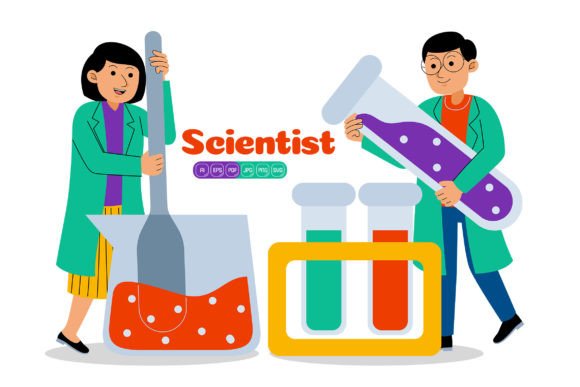
One underappreciated advantage of owning a large, editable vector library is the freedom to combine elements and create scenes that no other brand can replicate. Even if you are not a trained illustrator, basic skills in programs like Adobe Illustrator or free alternatives like Inkscape allow you to select individual figures, drag them into a fresh canvas, and arrange them alongside other icons or text. You could pair a male scientist holding a clipboard with a female scientist operating a centrifuge, add your own branded background, and export a unique graphic in minutes.
This capacity for remixing extends the life of your investment. As your content needs evolve—say you launch a podcast and need a new cover, or you introduce a women-in-STEM mentorship program—you can quickly assemble fresh illustrations without additional purchases. The ability to change colors also lets you match the imagery to a specific campaign’s emotional tone: cooler blues for a serious research announcement, warmer oranges for a community engagement initiative. This intentional color psychology layer adds another dimension to your visual strategy.
Long-Term Value and Risk Mitigation
Using man and woman scientist profession illustrations without a clear framework carries some risk. If you simply drop figures into a design without considering context, you may inadvertently create misleading impressions—for example, showing a scientist holding an unrelated piece of equipment, or using a style that clashes with the seriousness of the topic. Plan your visual pairings as carefully as you plan your copy. Always ask whether the image supports the core message or distracts from it.
Another risk is over-reliance on a single illustration style as design trends shift. While flat design remains widely adaptable, keep your original vector files accessible so you can make subtle updates—thicker lines, adjusted proportions—if your brand refreshes its look. A well-organized asset library with 100 starting points gives you raw material that can evolve, rather than a static collection that becomes obsolete in a year.
When used intentionally, this type of resource supports not just marketing efficiency but also deeper strategic goals. An educational platform that consistently depicts diverse scientists builds learner trust and authority. A startup pitching to investors can make its team look more established and detail-oriented through polished proposal decks. A nonprofit promoting scientific literacy can create campaigns that resonate across demographics because the visuals feel authentic and inclusive. Each of these outcomes stems not from the illustrations alone, but from the thoughtful decisions behind their selection and customization.
Ultimately, the value of a comprehensive vector illustration collection lies in its ability to help you communicate complex ideas with clarity and personality. Whether you are designing for a website, a printed report, or an animated explainer, the flexibility to resize, recolor, and recombine male and female scientist figures ensures your visual storytelling remains as dynamic as the science itself. By treating these assets as strategic tools rather than disposable decorations, you position your brand, your content, and your message for lasting impact.